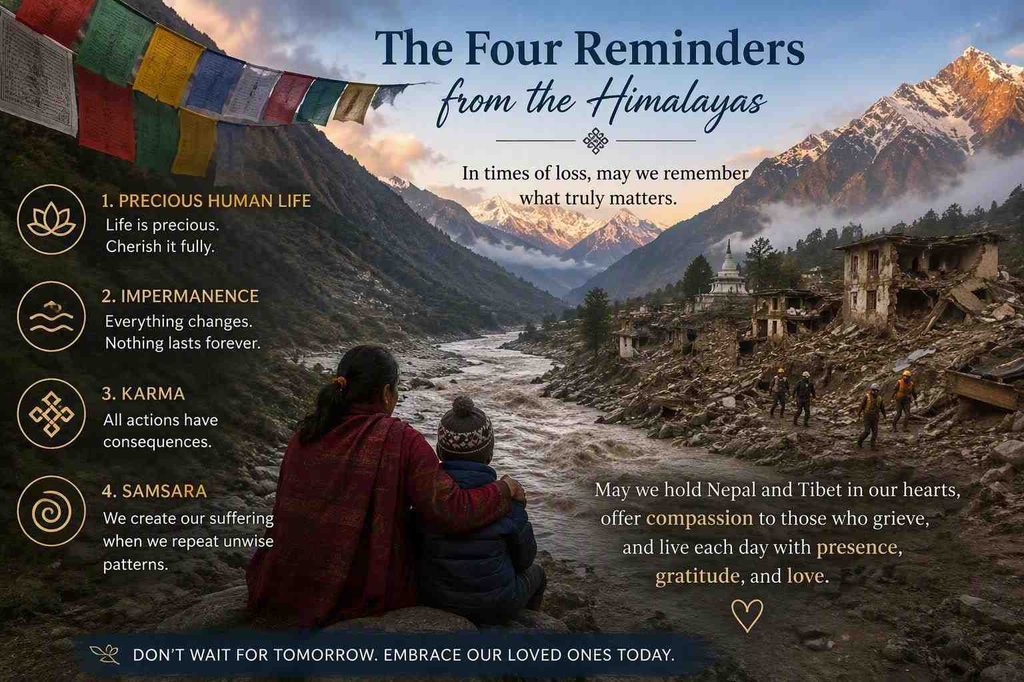
In Nepal and Tibet, over the past days people are experiencing agony and heartbreak as rescue workers search through the rubble and mud in the river valleys. As we watch from the United States our hearts hurt for those families who are waiting for news about their loved ones or have had their greatest fears already confirmed. But as we mourn for others, let us also embrace the gift of being fully alive.
Earlier this week, Sadhguru, a Sufi mystic, was the scheduled teacher for a time of spiritual gathering and learning. But in the aftermath of the flood, which impacted workers in his foundation, it became a time of solidarity. Sadhguru spoke about the Four Reminders, teachings from Tibetan Buddhism that educate that life is precious and fragile and we should embrace and live it as fully as we are able. The Four Reminders invite us to an urgency of becoming fully present.
The first Reminder is that human life is precious. The second is about impermanence. Everything is always changing and there is no sparing us from this reality. The third Reminder is karma. Not karma as a punishment for bad deeds, rather than all our actions have consequences. Lastly, the fourth reminder is about samsara – that we create our own suffering when we keep repeating unwise actions because we cannot visualize living or doing something in a new way.
In this Himalayan disaster the Four Reminders invite us to appreciate those around us because their lives are precious and our relationships with them are impermanent. It is critically important to live into the time we have together. Don’t wait for tomorrow, embrace our loved ones today. Also, to feel compassion for the families in Nepal, who are looking for loved ones they may never find. The disaster also points out that karma is at work because of the way humans have treated the earth. There are consequences to acting in ways that have created global warming. What can countries learn about early-warning systems, sharing scientific data, and political rivals working together on the climate crisis. Sahguru explains, “This is not about nationalities an political affiliates, it is about humanity.”
We all feel the weight of the human losses caused by the flooding and mudslides. While we cannot be there to pull people from rivers or rescue them from collapsed homes, we can remember that life is deeply precious and impermanent. What life-giving and life-sustaining actions can you engage in this week? Where can you provide help for the communities that touch your heart?